Brand Identity Design for Small Businesses: Logo vs Brand Identity
A logo is one asset. A brand identity is the full system of color, type, voice, imagery, and rules behind it. Small businesses that stop at a logo look inconsistent and earn less trust. Build a lean identity first, then scale it as you grow.
Nike reportedly paid $35 for its Swoosh in 1971. That logo did not build a global empire. Decades of consistent identity did. Here is the uncomfortable truth about brand identity design for small businesses: most owners spend weeks on a logo and zero hours on everything that makes people remember it.
If your brand is a logo and nothing else, you are borrowing credibility you have not earned yet. Let us fix that.
1. Logo vs Brand Identity: Know the Difference Before You Spend a Rupee
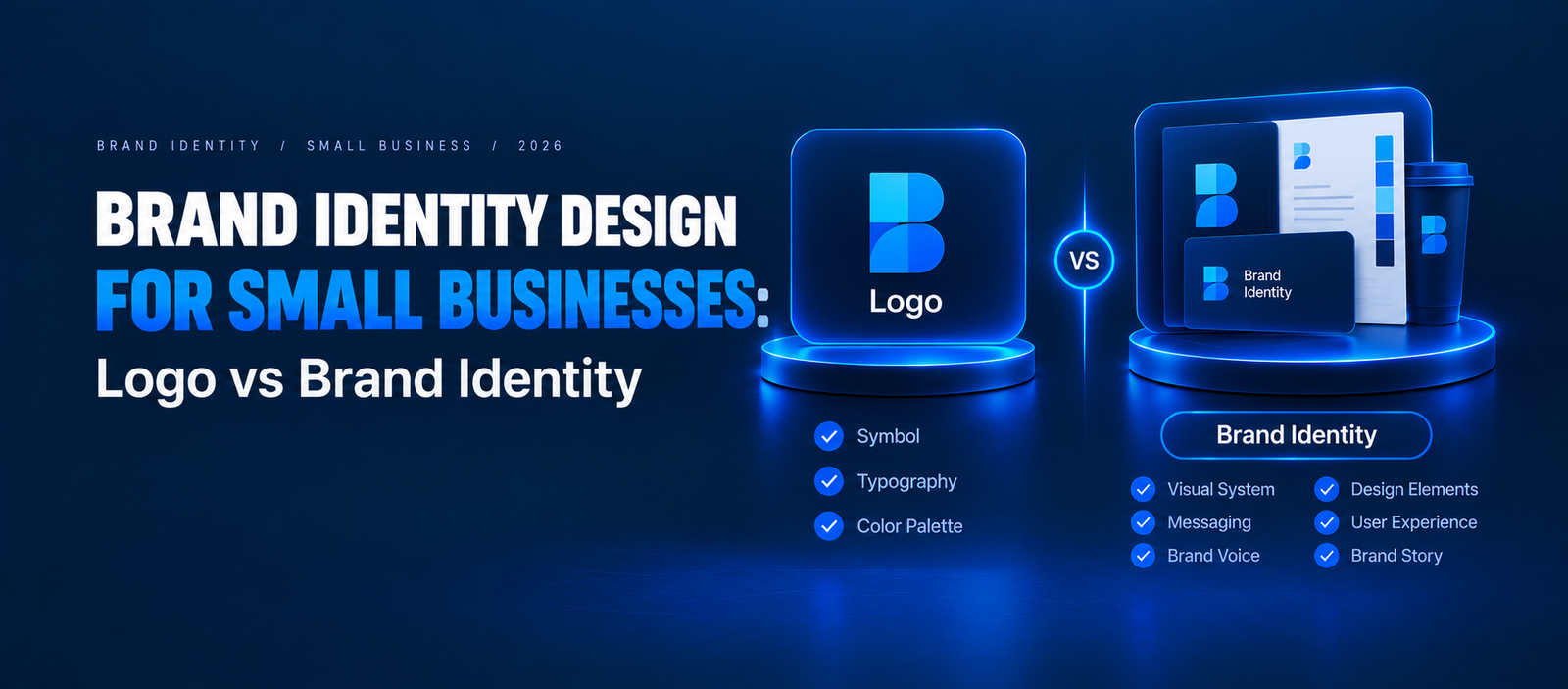
A logo is a single mark that identifies your business. A brand identity is the complete visual and verbal system that makes your business recognizable, consistent, and trustworthy everywhere it shows up. Confusing the two is the most expensive branding mistake small teams make, because it leads to budgets spent on a symbol with nothing supporting it. Resources like our small business branding guide go deeper on how the pieces connect.
What Is a Logo, Exactly?
A logo is a wordmark, symbol, or combination of both. It answers one question: "Who is this?" It is essential, but it is also just one file in a much bigger toolkit.
What Is Brand Identity?
Brand identity covers your logo suite, color palette, typography, imagery style, tone of voice, messaging, and usage rules. It answers a bigger question: "What does this business feel like, and can I trust it?"
Real-World Example: Nike's $35 Swoosh
Nike paid a graphic design student a reported $35 for the Swoosh. The mark itself was modest. The identity wrapped around it, from athlete storytelling to a relentless visual standard, is what made it priceless.
Pro Tip: Ask your designer for a "logo suite" (primary, stacked, icon-only, one-color) before you ask for a "brand." It forces the conversation about where the logo will actually live.
Micro-CTA: Not sure which one you have today? Audit your last five customer touchpoints and see if they look like the same company.
2. Why Brand Identity Design for Small Businesses Pays Off
Small businesses compete on trust before they can compete on price or scale. A coherent identity signals reliability, and signals decide whether a stranger clicks, buys, or bounces. The numbers below are cited approximately, so check each primary source before you reuse them in client work.
Does Brand Identity Actually Affect Revenue and Trust?
According to the Edelman Trust Barometer Special Report: Brand Trust (2019), approximately 81% of consumers said they must be able to trust a brand to buy from it. Research from Lucidpress (now Marq) has linked consistent brand presentation to revenue gains in roughly the 10-20% range, though the exact figure differs by report edition. A brand consistency checklist helps you test where you stand.
Why Does Color Matter So Much?
A widely cited University of Loyola Maryland study is often quoted as showing color can lift brand recognition by up to 80%. I could not trace the original paper, so treat this as a directional claim, not a hard benchmark.
Mini Case Study: Gap's 2010 Logo Reversal
In October 2010, Gap unveiled a new logo and, after heavy public backlash, reverted to its classic design within about a week. The lesson: customers attach meaning to identity. Change it without strategy and you pay for it.
Pro Tip: Before any rebrand, write down the three feelings you want customers to have. If a new asset does not trigger them, do not ship it.
Micro-CTA: Pull your brand colors and fonts into one page today. If you cannot, your team cannot stay consistent either.
3. What a Complete Brand Identity Includes (Comparison Table)
A complete identity turns "we made a logo" into "we have a system." The table below shows what each approach delivers, so you can decide where your business sits right now. If you are planning a site build next, our website design for small businesses resource shows how identity feeds layout and conversion.
| Element | Logo Only | Full Brand Identity |
|---|---|---|
| Logo variations | 1 file | Primary, stacked, icon, one-color |
| Color system | Implied | Primary, secondary, accessible neutrals |
| Typography | None | Headline, body, UI fonts |
| Imagery and icons | None | Defined photo and illustration style |
| Voice and messaging | None | Tone guide, taglines, boilerplate |
| Usage rules | None | Brand guidelines document |
| Consistency across channels | Low | High |
What Are the Core Brand Identity Elements?
Think of five pillars: logo suite, color palette, typography, imagery style, and brand voice. Skip one and the others wobble.
Which Businesses Need a Full Identity?
If you sell online, run ads, publish content, or hire, you need a full identity. Every channel multiplies the cost of inconsistency.
Real-World Example: Airbnb's 2014 Rebrand
Airbnb's 2014 rebrand introduced the Bélo symbol with a full system around it: color, type, and a story about belonging. The symbol alone would have been decoration. The system made it a brand.
Pro Tip: Document your identity in a one-page "brand cheat sheet" with hex codes, font names, and three voice rules. Share it with every freelancer you hire.
Micro-CTA: Download our free brand cheat sheet template and fill it in before your next campaign.
4. How to Build a Lean Brand Identity Without Burning Your Budget
You do not need an agency-sized budget to build a credible identity. You need clarity, a short list of decisions, and the discipline to apply them everywhere. This is where brand identity design for small businesses becomes a competitive advantage instead of a cost. Pairing it with a content marketing strategy for startups makes every post reinforce the same identity.
Step-by-Step: Build Your Identity in Six Moves
- Define your positioning. Write who you serve, what you solve, and why you are different in two sentences.
- Pick three brand personality traits. Bold, warm, and expert will guide every decision that follows.
- Choose a color palette. Select one primary, one secondary, and two neutrals. Check contrast for accessibility.
- Select two typefaces. One for headlines, one for body text.
- Design the logo suite. Include primary, icon-only, and one-color versions.
- Write the rules. Capture it all in a short brand guidelines document and apply it everywhere.
What Does It Cost to Do This Right?
Costs vary widely by designer, region, and scope, and I do not have a verified benchmark to quote. Get at least three scoped quotes and compare deliverables, not just prices.
Mini Case Study: Mailchimp's 2018 Rebrand
Mailchimp's 2018 refresh kept its chimp mascot but added a custom illustration style, a bold yellow, and a distinctive typeface. The result felt unmistakably Mailchimp without a single competitor looking the same.
Pro Tip: Test your identity on a phone screen, a social avatar, and a printed invoice. If it breaks in any of the three, simplify.
Micro-CTA: Ready to stop guessing? Book a free brand identity audit with Cross Globe Marketing.
Summary
A logo tells people who you are. A brand identity tells them why to believe you, and keeps telling them across every ad, email, and storefront. The businesses that win on trust invest in the system, not just the symbol. For brand identity design for small businesses, the smart path is to start lean, document the rules, and scale the system as revenue grows.
Key Takeaways
- A logo is one asset; a full identity is a system of color, type, imagery, voice, and rules (Cross Globe Marketing analysis).
- Approximately 81% of consumers say they need to trust a brand before buying (Edelman Trust Barometer Special Report: Brand Trust, 2019).
- Consistent brand presentation has been linked to revenue gains of roughly 10-20% (Lucidpress/Marq research, figure varies by edition).
- Color is often cited as lifting brand recognition by up to 80% (University of Loyola Maryland study, original source unverified).
- Gap reverted its 2010 logo within about a week after public backlash (widely reported by major business press).
- Nike reportedly paid $35 for the Swoosh in 1971, proving identity, not the logo price, builds value (widely reported brand history).
Ready to turn your logo into a brand people trust? Talk to Cross Globe Marketing today.
Quick Summary
Brand identity design for small businesses means building a full system, not just a logo. A logo is one asset, while a brand identity combines logo suite, color palette, typography, imagery, voice, and usage rules. Approximately 81% of consumers say trust is required before they buy, and consistent presentation has been linked to revenue gains of roughly 10-20%. Start lean with a six-step process and scale as you grow.